Community Care Gaming will collaborate with academic organisations and specialist research partners to extend the current literature on gaming, gambling, esports, and the metaverse and their impact on humanity.
This short paper critically evaluates enrichment activities in UK care homes, linking them not only to the Care Quality Commission (CQC) standards but also to recent UK health and social care policy, including (i) NHS Long Term Plan, (ii) Health and Care Act 2022, and (iii) Better Care Fund. It argues that while policy strongly supports person-centred, preventative, and integrated care, structural constraints limit the effective delivery of meaningful enrichment.
READ MOREDepression is characterised by a “loss of pleasure or interest in activities for long periods”, leading to problems such as a depressed mood, decreased appetite, fatigue and a feeling of worthlessness. People of all ages suffer from depression all over the world. However, its causes may differ between people of different ages because they are experiencing different things in life.
READ MOREDespite common misconception, dementia is not a disease, but rather a group of symptoms. These begin as symptoms of mild cognitive impairment, which is a general term for a group of problems that make carrying out daily tasks difficult and are a common occurrence in a variety of illnesses.
READ MOREThe American Psychological Association defines loneliness as an “affective and cognitive discomfort or uneasiness from being or perceiving oneself to be alone or otherwise solitary.” Moreover, while not officially classified as a medical condition, the effects of loneliness then lead to more serious neurological disorders. A disorder that is exacerbated is MDD or major depressive disorder.
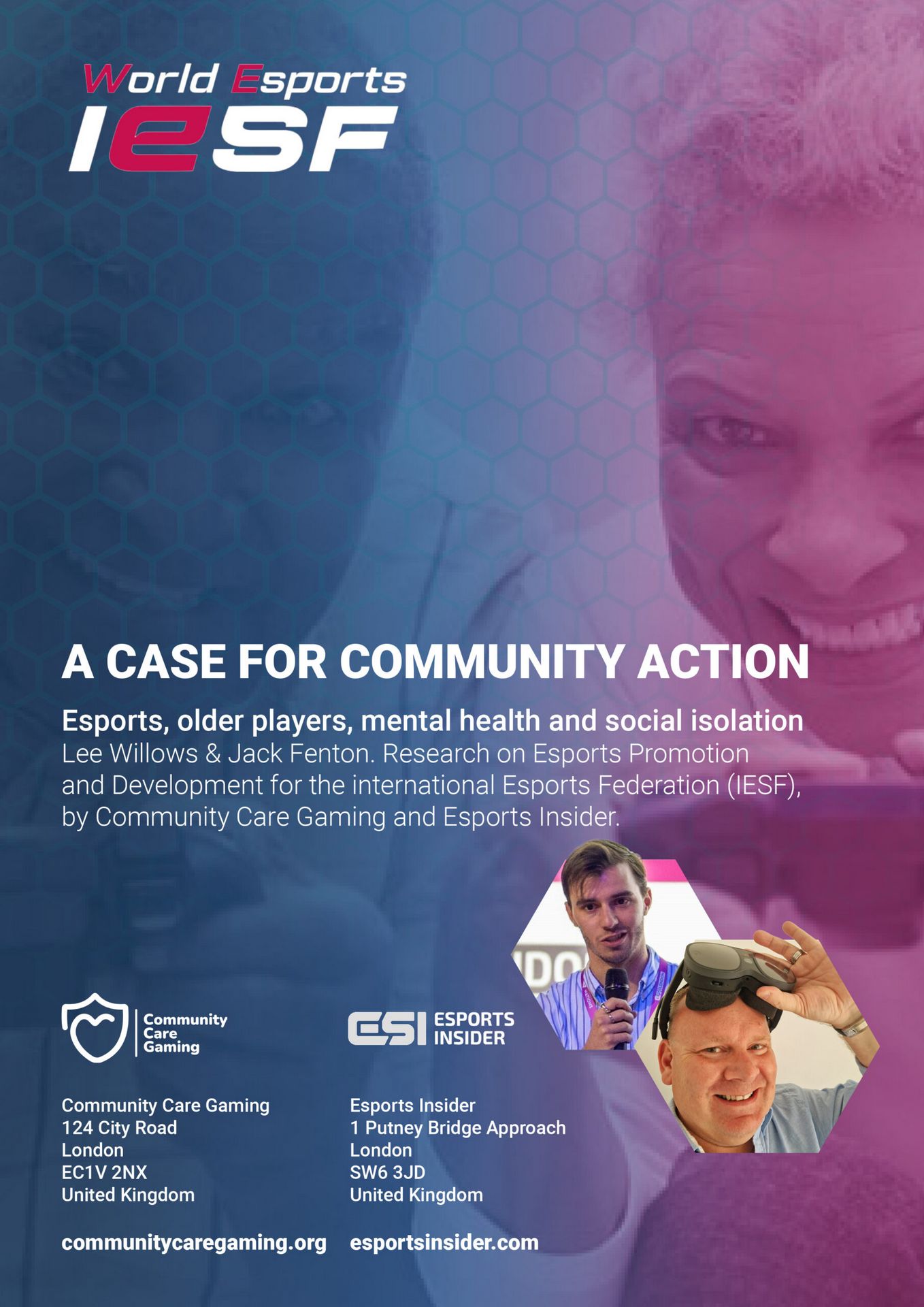
READ MOREThe topic of mental health in esports is an increasingly crucial aspect of both the professional community and of those who enjoy esports games casually. In a digital age where we connect increasingly online, those that are less digitally literate struggle more and more with an inevitable challenge of loneliness that is not part of the regular dialogue on mental health.
READ MOREA stroke is a serious medical emergency caused by either a blockage of blood flow to the brain or sudden brain bleeding. Immediate symptoms include muscle weakness, vision loss, headaches, dizziness, and trouble speaking or understanding speech. Stroke can cause lasting brain damage and disability, with 1.3 million survivors in the UK. Risk factors include being over 50, having sickle cell disease, leading an unhealthy lifestyle, and having migraines.
READ MOREVirtual reality (VR) is a digital technology that creates immersive, interactive 3D environments through devices like headsets and motion sensors. It can be classified into non-immersive, semi-immersive, and fully immersive experiences, with the latter offering the highest level of interaction by blocking out the real world. VR health technology can be used in rehabilitation, where it is able to simulate real-world tasks in a controlled, engaging setting.
READ MORE